

Walk through the old streets of Rome or wander a quiet village in the Greek islands and you will notice something. The buildings are old. Really old. Some of them have been standing for thousands of years.
And they’re still standing because of one simple thing – stone.
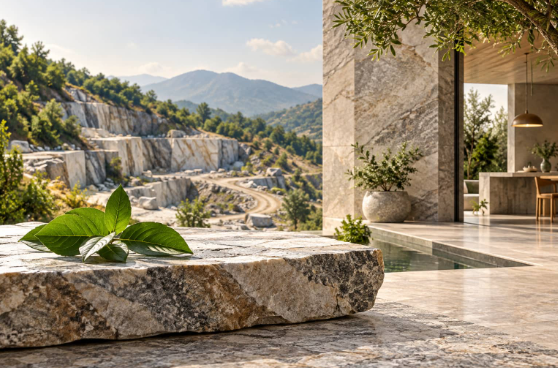
Stone has a way of making a space feel grounded, timeless and a little bit special. It’s the same feeling you get walking cobbled laneways in Italy, just brought home to your own backyard. But here’s the question a lot of homeowners are asking lately, Is natural stone actually sustainable or is that just a nice story we tell ourselves? Let’s break it down.
Long Lasting Benefits of Natural Stone
Before we get to sustainability, it helps to understand why stone has been humanity’s go-to building material for, well, forever.
- The Great Pyramid of Giza was built using limestone blocks and it’s still standing after more than 4,500 years.
- The Parthenon in Athens, one of the most photographed monuments on earth, is largely marble.
- Ancient Roman roads, many still walkable today were paved with natural stone
- Countless European cathedrals, castles and city squares owe their longevity to stone construction.
This isn’t a coincidence. Stone doesn’t rot, warp, rust or get eaten by termites. Civilisations figured this out early and honestly, they were onto something. When something can last thousands of years without falling apart, that’s a pretty strong argument for its durability and durability is actually one of the many things when looking for sustainability.
Is Natural Stone Really Eco-Friendly?
Mostly yes, with a few things worth knowing.
It’s naturally occurring. Unlike concrete pavers or synthetic tiles, natural stone pavers are not manufactured in a factory using heavy chemical processing. They’re quarried, cut, and finished. That’s a much shorter, simpler production chain.
It lasts for decades, not years. A well-laid stone path or patio can outlive several renovations. Less replacing means less waste heading to landfill over time.
One Material, Endless Looks
Here’s the part a lot of homeowners don’t realise is that the same stone can look completely different depending on how it’s finished.
- Honed: Smooth, matte, and modern, ideal for sleek entertaining areas
- Tumbled: Softer edges and an aged, old-world character
- Split-face: Raw and textured, great for a rustic or bushland setting
One material, three completely different personalities. If you get tumbled stone or split-face then it’s perfect for a cottage garden or a coastal retreat. Well, that kind of range is hard to pull off with a synthetic tile and it’s part of why natural stones ever look “generic.” There’s also a quieter sustainability angle here because one material can be finished in so many ways. This results in less requirement to source multiple different products for different zones of the same home.
Residential vs Commercial Space
Let’s understand how natural material choices play out differently across homes and commercial spaces.
|
Aspect |
Residential | Commercial |
|
Main focus |
Longevity and low maintenance | Durability under heavy use |
|
Foot traffic |
Light, occasional |
Constant, high volume |
|
Maintenance needs |
Minimal, no yearly repainting or resealing |
Regular upkeep budgeted, but far less than alternatives |
|
Wear and tear |
Slow, gradual over decades |
Handles daily wear without cracking or fading |
|
Replacement cycle |
Rarely needs replacing once laid |
Fewer repairs and shutdowns over the building’s life |
|
Sustainability payoff |
Quietly lasts through seasons, year after year |
Lower environmental impact over a 20–30 year lifespan |
| Cost consideration | Lower upfront, long-term savings |
Higher upfront, but cost-effective long-term |
What Happens When It’s Time to Renovate?
Concrete pavers, once cracked, usually end up in a skip bin. Natural stone doesn’t have to. Old pavers and tiles can be lifted, cleaned and reused elsewhere on the property or crushed down and repurposed as base material for a new path. It’s one of the few outdoor materials that still has value at the end of its first life.
The Bottom Line
Natural stone isn’t a perfect, zero-impact material. Nothing really is. But when you weigh up how long it lasts, how little maintenance it needs and how it can be sourced locally, it holds up as one of the more genuinely sustainable choices for outdoor spaces. So next time you’re picturing a stone path leading through the garden or limestone outdoor tiles for your backyard, know that you’re choosing something durable yet stylish.
Disclaimer: The information provided in this blog is to the best of our knowledge and intended as a general guide. We recommend confirming all details based on your specific project requirements before execution.
