

9 Artificial Plants for Minimalist Interiors
(Image Credit: The Plants Project)
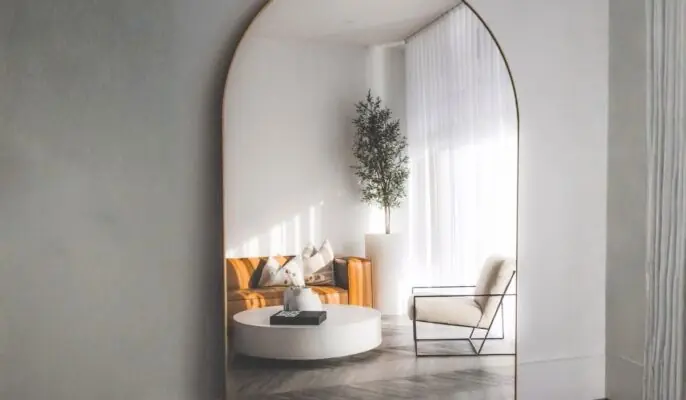
Minimalist interiors feature neutral colours, clean lines and well-chosen furniture. But without a little greenery, these areas can sometimes appear harsh or incomplete.
Artificial plants are an easy way to bring natural shapes, colour and texture into your home without adding to your household maintenance. The trick is to select plants that suit the size and style of the room, not work against it.
Here are nine faux plants to consider for the minimalist house, from sculptural statement trees to little greenery on shelves.
1. Olive Trees for a Mediterranean Zen
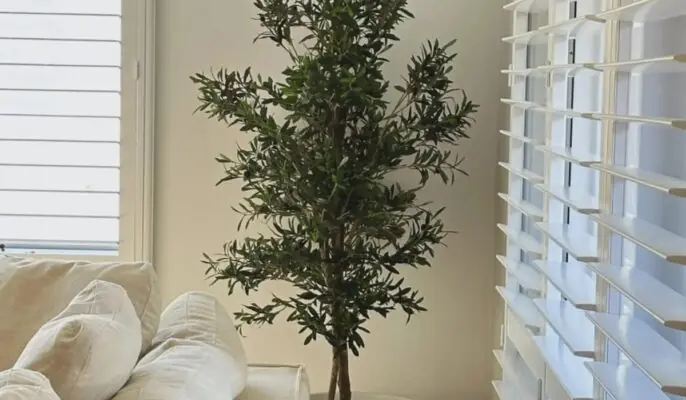
Artificial olive trees with thin branches, muted green foliage and an airy profile are perfect for interiors inspired by Mediterranean and contemporary style.
An olive tree would fit in perfectly by a linen sofa, by a big window or in a bare nook. Its delicate foliage provides texture without crowding the space. Select a plain stone, ceramic or off-white planter that matches the tree’s basic look. Pair it with natural materials such as travertine, oak or woven textiles for a harmonious look.
(Image Credit: The Plants Project)
2. Statement Corner with Fiddle Leaf Figs
The fiddle leaf fig has big, rounded leaves and an upright habit. Its unique design makes it a perfect centrepiece in minimalist living areas. Place one next to a sofa or armchair to soften the clean lines of contemporary furnishings. White walls and mild timber flooring are contrasted with lush green vegetation.
Don’t load it up with too many decorative objects. A strategically placed tree might offer all the visual intrigue the corner requires.
3. Rubber Trees in Contemporary Interiors
Artificial rubber trees with their broad, glossy leaves and rich green hue add a more structured look to interiors. They perform particularly well in modern residences with black accents, concrete finishes or darker timber furnishings.
To the side of a low-profile entertainment unit, try a rubber tree in a matte black planter. The mix generates contrast yet maintains a restricted hue palette. Opt for a compact variety in smaller areas to provide greenery without blocking light or breaking up the flow through a space.
4. Architectural Effect of Bird of Paradise Plants
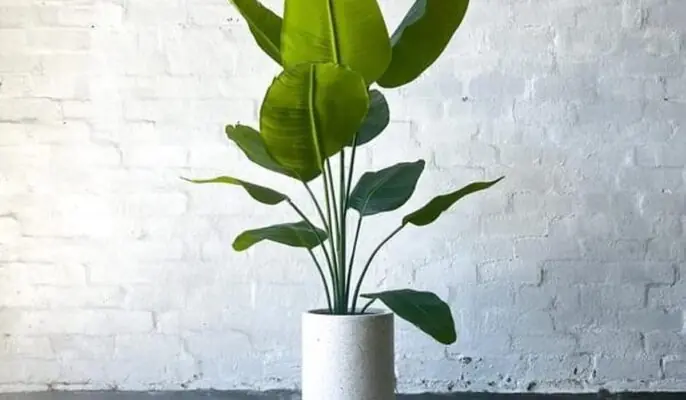
If you are looking for minimalist interiors that need height and clarity, the bird of paradise is a great alternative. The bold vertical lines of its erect, oversized leaves are perfect for contemporary architecture and furniture.
A tall faux bird of paradise might assist balance a high ceiling or fill in the area next to a sliding glass door. Make sure there is clear floor space around it so its sculptural form is the focus. The leaves are inherently bold and therefore this plant is particularly effective in spaces with modest furnishings and not much on the walls.
(Image Credit: The Plants Project)
5. Zanzibar Plants for a touch of green
The ZZ plant, or Zanzibar plant as it is usually called, has compact, glossy foliage and a naturally neat look.
The upright stems make it particularly ideal for minimalist bedrooms, home offices and modest living areas. Place one on a low cupboard or at a desk to bring in greenery without taking up too much room. A basic planter in a neutral finish keeps the room’s clean appearance.
Its fairly consistent shape also makes it a suitable choice for situations where you want foliage to complement the furnishings rather than be the main highlight.
6. Organic Shapes + Monstera Plants
Minimalist styling does not mean that every decorative element has to be rigid and symmetrical in shape. The monstera’s split leaves contrast strongly with furniture with straight edges and plain architectural lines.
An artificial monstera looks good behind a timber sideboard or in a reading area. Its robust leaves may ease up areas that are heavy with hard surfaces. Allow enough space for the individual leaves to be appreciated. Let the odd forms of the leaves be the decorative element, instead of mixing them with many smaller ones.
7. Eucalyptus Trees for Subtle Colour
Eucalyptus works especially well in Australian minimalist environments where natural materials and earthy colour palettes are favoured. The subtle foliage looks great with warm whites, beige upholstery, timber and natural stone.
An fake eucalyptus tree can give height to a dining room or entryway without adding a lot of bright colour. Choose a planter with a delicate texture to match the organic sense.
For a comfortable Aussie feel, team eucalyptus with linen drapes, light timber furniture and some well-chosen ceramic decorations.
8. Sansevieria Plants for Small Spaces
Snake plants (also known as sansevieria plants) feature tall pointed leaves that form a neat architectural profile. The slim design makes them handy in small flats, hallways and home offices where floor space is tight.
Put one next to a console table or in a skinny planter at an entryway. The vertical greenery is looking up but is not occupying a lot of visual space. Sansevieria also works well in minimalist bathrooms, where its structured leaves can match basic tiles, stone benchtops and streamlined fittings.
9. Jasmine Trees for a Delicate Texture
For a gentler green, try a fake delicate jasmine tree. These are a sophisticated alternative to larger, broad-leaf plants. Its delicate branches are visually interesting, but they don’t block out the light or the other furniture around it.
Style one in a simple ceramic pot next to an occasional chair or in a peaceful corner of a bedroom. Its light appearance is particularly suitable for Scandinavian-inspired designs. You might place it in front of a blank wall, so the delicate branches can add understated appeal without competing with art or other decor.
Artificial Plants for the Minimalist Home
First, think about the size and scale of your space while decorating with plants. A tall plant can anchor an empty area, while smaller plants are more suited to shelves, desks and compact surfaces.
Stick to the same colour scheme as the rest of your home with your planters and don’t combine too many plants together Each arrangement should be spaced such that the greenery may be used into the design.
Also examine the quality of the faux greenery. Realistic leaf forms, natural colour variations and well-proportioned branches can make a dramatic difference, especially in minimalist environments where individual decorative elements are more likely to be noticed.
If you want to add a bit of greenery to your home without the hassle of watering, pruning or worrying about sunshine requirements, The Plants Project has a choice of beautiful artificial plants and trees that complement modern Australian homes.
In the end, good minimalist styling is all about careful arrangement. The right plant can add warmth and personality to a room, and yet maintain the simplicity that makes minimalist designs so appealing.
